
Checking Criminal History in Taos County
No single search covers every Taos County criminal record. Start with New Mexico Courts Case Lookup for charges and court outcomes. Ask the Taos County Adult Detention Center about recent custody. Use NMCD Offender Search for state prison, probation, or parole status. A person reviewing their own statewide history can request a report from the New Mexico Department of Public Safety. Each source answers a different question, so record the full name, any middle name, the likely date range, and the agency or court involved before searching.
The strongest match uses a case number or agency report number. When only a name is known, test spelling variants and confirm the result with filing dates, court location, and other public context. Never treat a same-name result as proof of identity. Follow these steps:
- Search New Mexico Courts Case Lookup by exact case number, or by first and last name with a Taos court location.
- Open each plausible case and compare the court, filing date, charges, parties, and case number.
- For recent custody, call county booking and give the full name plus a birth date or booking date if known.
- Request the incident report from the arresting agency and any releasable booking record from the county custodian.
- Ask the right court clerk for filed documents, certification, older material, or confirmation of the final disposition.
Taos County Has Separate Record Systems
The phrase criminal history can hide four distinct systems. A police or sheriff report states what an officer alleged and observed. A jail record documents intake, custody, bond, and release. A court docket tracks the complaint, hearings, filed charges, and outcome. The DPS repository links reported arrest cycles to dispositions when contributing agencies supply them. A gap in one system does not erase a record in another.
This distinction is vital in Taos County. Municipal, county, state, tribal, and federal agencies may act in the same region. Search the forum that handled the event, not just the place where it happened. The channel comparison shows the practical split.
| Channel | Best use | Main limit |
|---|---|---|
| Case Lookup | Charges, events, and dispositions | Summary only, with protected and older records omitted |
| TCADC booking | Recent county custody | No verified public online roster |
| DPS record review | One’s own reported New Mexico history | Not an open public name search |
| NMCD Offender Search | State prison and supervision | Does not include county jail custody |
New Mexico Official Background Checks
The New Mexico Department of Public Safety Law Enforcement Records Bureau holds the central criminal-history repository. Its personal review covers reported felony arrests, misdemeanors punishable by six months or more, and DWI. The subject, counsel, or an authorized agent submits a complete, legible, notarized Authorization for Release of Information. The fee is $15 by cashier’s check or money order. DPS publishes a turnaround of 7 to 15 working days, depending on workload.
The form asks for the subject’s legal name, aliases, birth details, sex, race, contact information, identifying number where requested, purpose, recipient, signature, date, and notary seal. Mail it with payment to LERB Customer Engagement, P.O. Box 1628, Santa Fe, NM 87504-1628. An FBI Identity History Summary is a separate subject-only fingerprint process. Its national scope does not replace a Taos County court file.
The official DPS page shows how the repository service is framed. The linked source above leads directly to the agency.
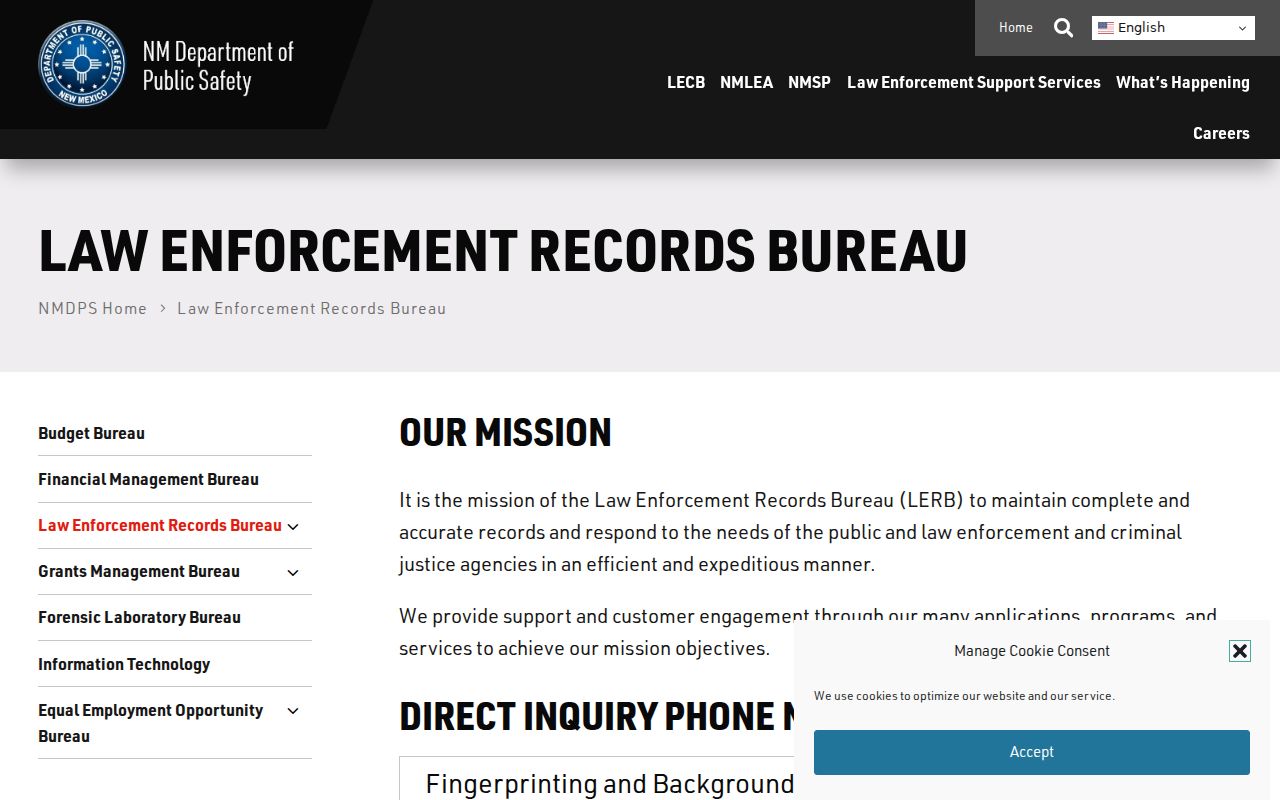
The image reinforces that New Mexico criminal-history review belongs with LERB, while local case documents remain with the courts.
Taos County Records at Albright
The Taos County Administration and Judicial Complex opened in 2011 after a 20-month project. Its three wings form a useful map of record custody. The east wing holds the courts, the north wing holds adult detention, and the south wing holds county administration. The offices share one complex at 105 Albright Street, but they do not share one file. District Court is in Suite N, Magistrate Court in Suite M, the District Attorney in Suite L, the county records custodian in Suite D, and the jail in Suite O.
A visitor seeking Taos County criminal records may need more than one counter. Felony documents come from the District Court clerk. Most misdemeanor files come from Magistrate Court. County public-record requests go to the custodian. Current custody questions go to booking. The official Taos County government gateway provides the county context for these offices.
That source is a starting point for county contacts, not a combined criminal-record database.
Criminal Record Types
Taos County records differ by the event and the keeper. The arresting agency writes the incident report. TCADC creates the booking file. A prosecutor and court create the charging and docket record. DPS receives qualifying fingerprints and later disposition data. NMCD maintains state custody and supervision records. The sheriff supplies registration data that feeds the public sex offender registry.
These common terms help keep a search on the right track:
- Booking record
- The jail’s intake, charge, bond, custody, and release entry for one event.
- Docket
- The court’s dated list of filings, hearings, orders, and other case events.
- Disposition
- The result for a charge, such as dismissal, plea, conviction, or acquittal.
- Rap sheet
- A fingerprint-linked repository history organized around reported arrest cycles.
- Bench warrant
- A judge’s order to take a person into custody, often after a missed hearing.
For more depth on filed charges and judgments, use the Taos County criminal court case search. Booking details and a court outcome should be read together when accuracy matters.
Taos County Booking Record Trail
A local arrest may create four records in quick order. The arresting officer writes the report. Staff at TCADC confirm the authority to hold the person, create a booking number, take a photo and fingerprints, inventory property, and enter the charges supplied at intake. A judge then considers release terms. A prosecutor may amend or decline charges, and the court records the filed case and outcome. Reportable fingerprint data can also reach DPS.
The path is best read as: Arresting agency → TCADC booking → Magistrate or District Court → DPS repository. The first booking charge may not match the charge finally filed or proved. The dedicated jail page currently describes an 88-bed facility, while an older complex fact sheet combined adult and juvenile beds. Use the current adult figure when discussing present capacity.
The DPS Criminal History Clearinghouse description shows how justice agencies can combine arrest, warrant, court, supervision, and registry data for official bond work.
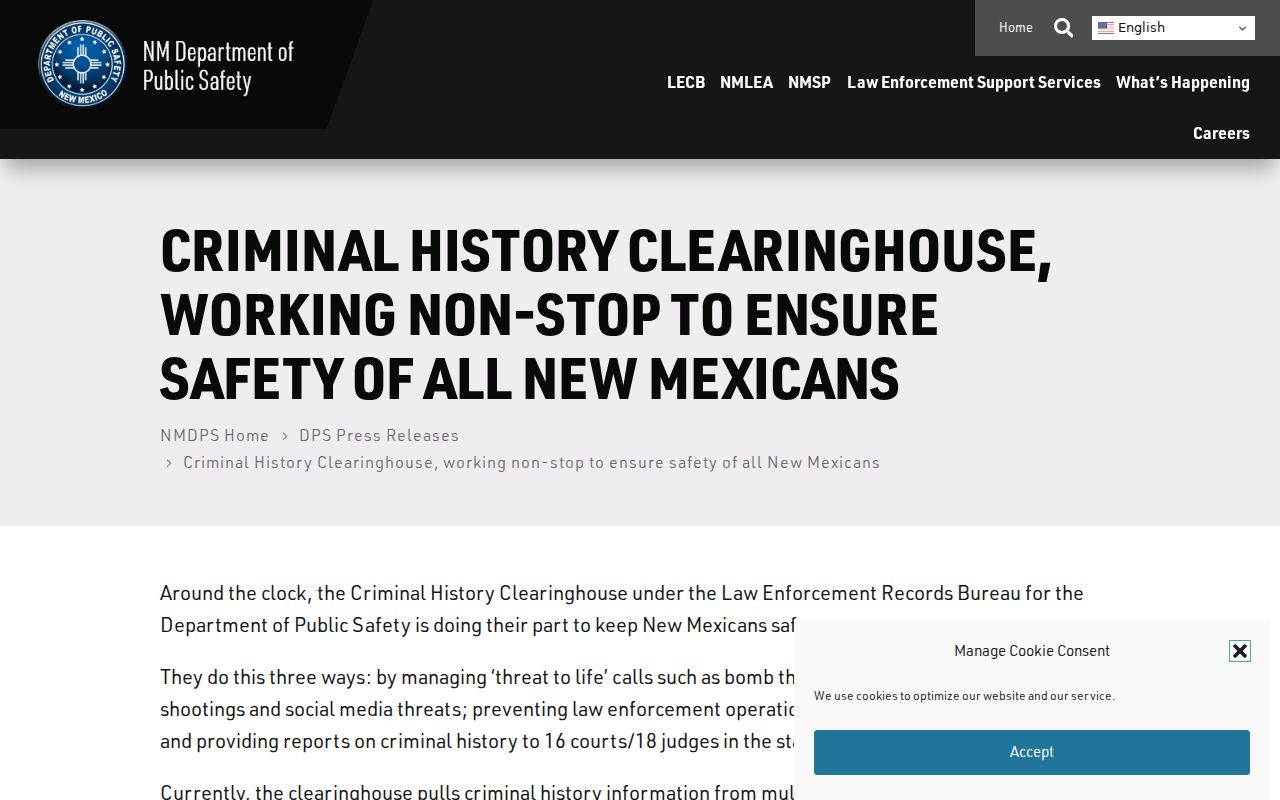
The public does not receive that combined official view through an open name portal.
Inside a Taos County Criminal Record
A repository record usually begins with identifiers and then groups arrests by date, agency, control number, and charge. Disposition segments may connect each cycle to a prosecutor or court result, sentence, and supervision. A court file instead centers on one case number. A booking record centers on one custody event. These structures overlap, but none is a substitute for the others.
| Name and identifiers | Legal name, aliases, birth details, state identification number, FBI number, and fingerprint identity where held. |
|---|---|
| Arrest and booking | Agency, dates, report or booking number, intake charges, bond, release, and custody status. |
| Charges and statutes | The alleged offense, degree, cited law, and later amendments when entered. |
| Disposition | The result for each charge, not merely whether the whole case is marked disposed. |
| Sentence | Custody, probation, restitution, fines, or other terms ordered by the court. |
| Supervision | State prison, probation, or parole information held by NMCD after county custody ends. |
Always preserve the court and case number when comparing sources. A missing online item may be protected, sealed, old, delayed, municipal, or outside the selected court.
Taos County Records Through NextRequest
When no public database exposes the needed county file, Taos County routes formal requests through its IPRA Records Custodian and NextRequest portal. Use this channel for county-created sheriff reports, releasable booking material, dispatch records, and other existing county records. Name the event date, location, agency, report or case number, desired record, and preferred format. Ask for an arrest report and a booking record separately because different units create them.
A written request needs the requester’s name, address, telephone number, and a reasonably clear description. Mail, email, fax, the portal, and an in-person request are available. The county need not create a report that does not exist. Active-investigation content, confidential sources, juvenile information, victim identifiers, and protected personal data may be withheld or redacted. Exact county copy and certification prices were not listed in the reviewed official material.
IPRA calls for prompt access. If a record is not ready at once, the custodian ordinarily gives a written response within three business days, with inspection generally no later than 15 calendar days unless the request is unusually broad or burdensome.
Public Access Laws in New Mexico
New Mexico law starts from broad access to public records, but it also protects certain people, files, and justice-system uses. Taos County implements the Inspection of Public Records Act through its county custodian. Court access follows separate judiciary rules. Repository arrest information has its own dissemination limits. Sealed, expunged, juvenile, victim, and personally identifying information can remain outside general public view.
Key New Mexico rules:
Sections 14-2-1 and 14-2-8 NMSA 1978 establish IPRA access and the written-request response framework.
Section 29-10-6 NMSA 1978 permits a person, counsel, or authorized agent to inspect that person’s arrest information.
Rule 1-079 NMRA and the Case Access Policy set court access tiers and protect restricted data.
Sections 29-3A-1 through 29-3A-7 NMSA 1978 authorize petitions to expunge qualifying records.
Access does not prove accuracy or guilt. Confirm a result with the office that holds the source record and read every charge-level disposition.
Taos County Custody Record Boundaries
No official public Taos County inmate roster or daily booking log was found. For recent local custody, call TCADC booking at (575) 737-3801 and provide the full name plus a date of birth or likely booking date when known. Ask whether the person was released or transferred. A written NextRequest can seek releasable booking fields, but the county does not have to create a custom list that it does not maintain.
NMCD Offender Search begins where county custody ends. It covers state prisoners as well as people on state probation or parole. Prison information updates nightly, and supervision data is described as real time. It does not cover TCADC. Federal custody is separate again. The Federal Bureau of Prisons Inmate Locator searches federal custody by identifying number or name fields.
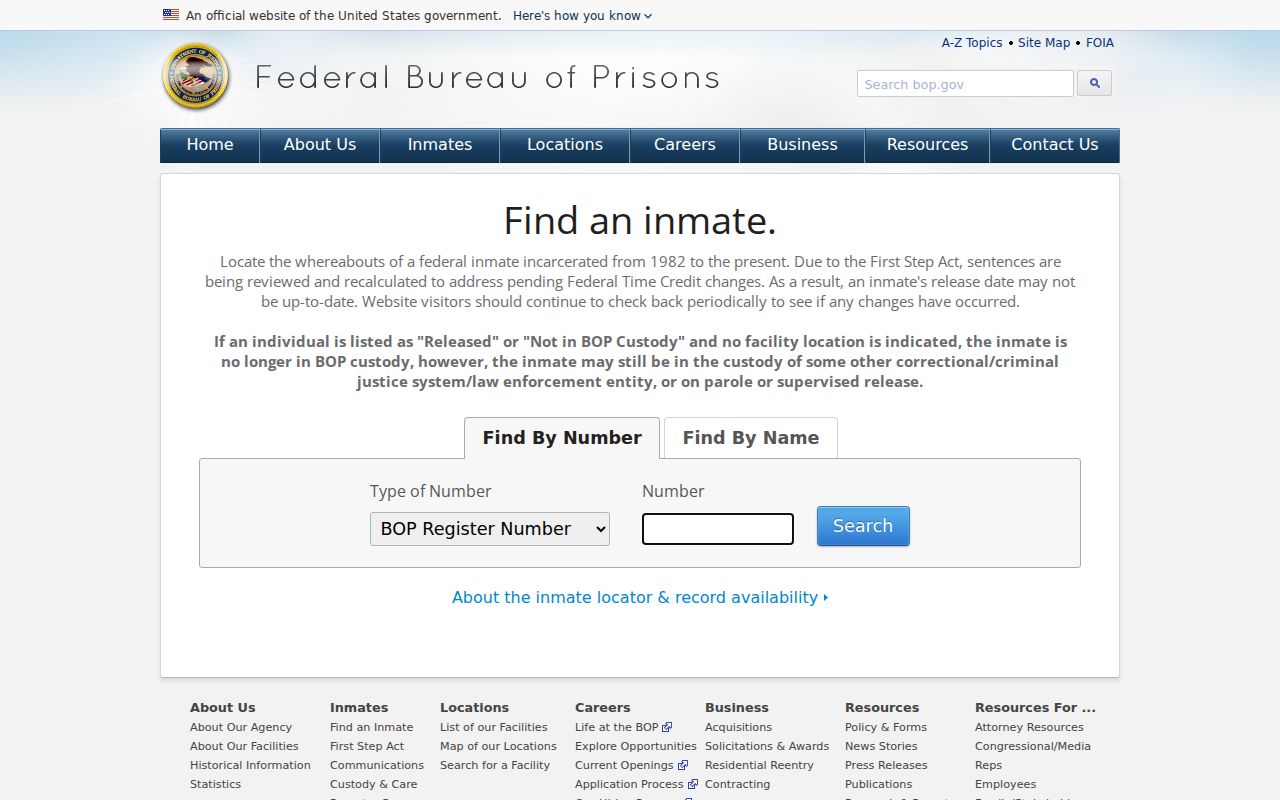
The federal image marks a jurisdiction boundary: BOP results cannot confirm county jail or New Mexico state custody.
Sealed, Expunged, and Restricted Records
New Mexico’s Criminal Records Expungement Act can remove qualifying arrest, court, corrections, and law-enforcement entries from general public access. Identity-theft relief has no waiting period when supported by proof. Arrests or charges without conviction generally require one year after final disposition. A conviction petition requires completion of the sentence, probation, fines, fees, and restitution, followed by the waiting period tied to the offense.
DPS’s 2026 explanation places misdemeanor relief at two years and first-degree felony relief at ten years. DWI, offenses against a child, sex offenses, embezzlement, and crimes causing great bodily harm or death are among the ineligible categories. A petitioner must have no pending criminal case and cannot be incarcerated. Conviction petitions require both a DPS record and an FBI Identity History Summary dated within 90 days before filing.
The FBI’s electronic Identity History Summary ordering portal is the official online start for that fingerprint-based personal record.
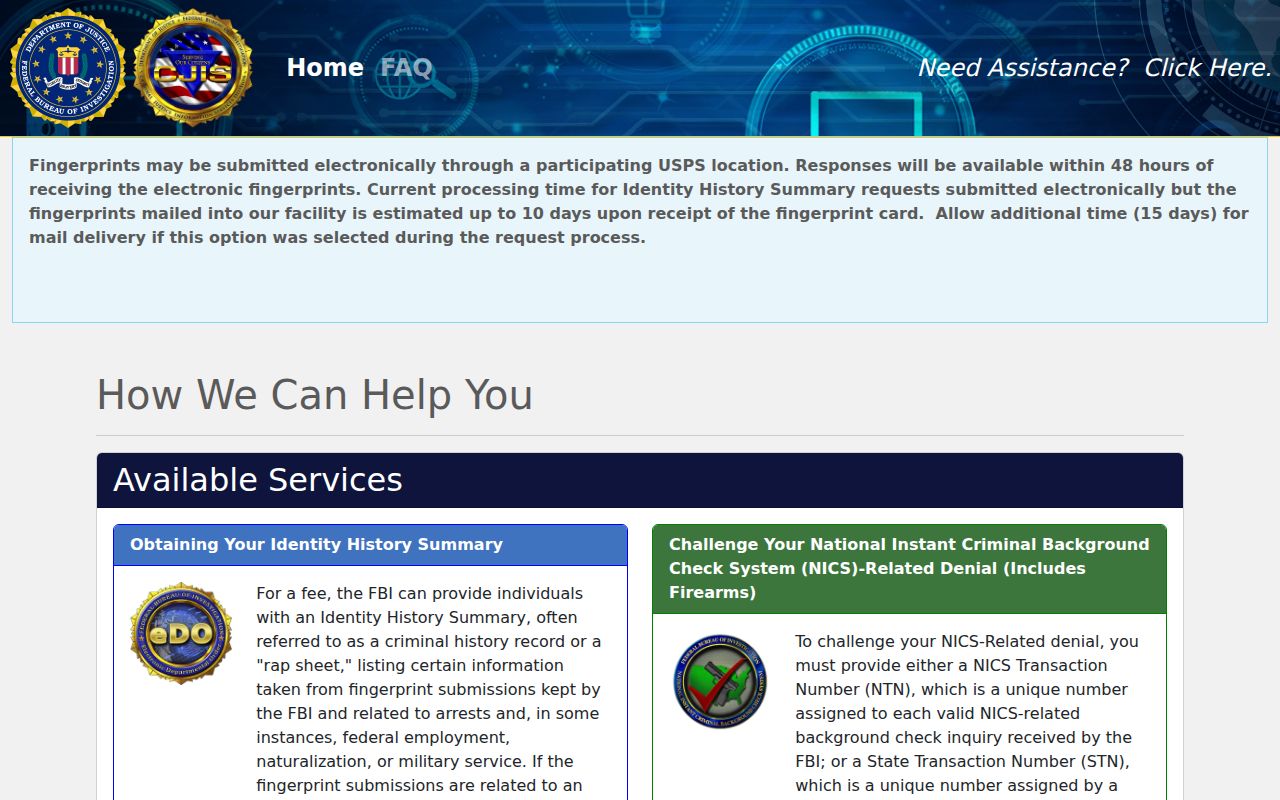
That report supports a qualifying Taos County petition, but the Eighth Judicial District Court decides whether relief is granted.
Taos County Expungement Record Fixes
File a Taos County petition with the Eighth Judicial District Court when the arrest occurred in the county. Use the New Mexico Courts suggested forms, list each related arrest and case, and serve the required parties. The reviewed sources did not publish the current filing or certified-copy fee, so ask the Suite N clerk about the cost and any indigency waiver.
Precision in the order matters. DPS may trace one case number through linked arrests, warrants, probation, parole, and incarceration entries in New Mexico CJIS. If a public entry remains after relief, preserve the signed order and contact the court clerk, the publishing agency, and the DPS Expungement Unit. Do not assume a new petition is the first or only fix.
The DPS Expungement Unit feature explains the current state process and the records needed for different petition types. The state workflow can reach beyond a single court screen, which is why a complete and accurate order matters.
Taos County Tribal and Federal Records
Location alone does not always identify the recordkeeper in Taos County. An event in Indian country may involve tribal public safety, the Bureau of Indian Affairs, the FBI, state or local police, and a federal prosecutor. State Case Lookup does not contain federal cases. PACER is the official federal docket channel, while a tribal agency controls its own law-enforcement record under the applicable sovereign rules.
A January 2026 federal prosecution arising from Taos Pueblo homicides illustrates the overlap. The official release names federal, tribal, state, town, and county investigators. Use it as a map of jurisdiction, not as a profile of a private person. The U.S. Attorney’s Office for the District of New Mexico is the official source for federal prosecution information.
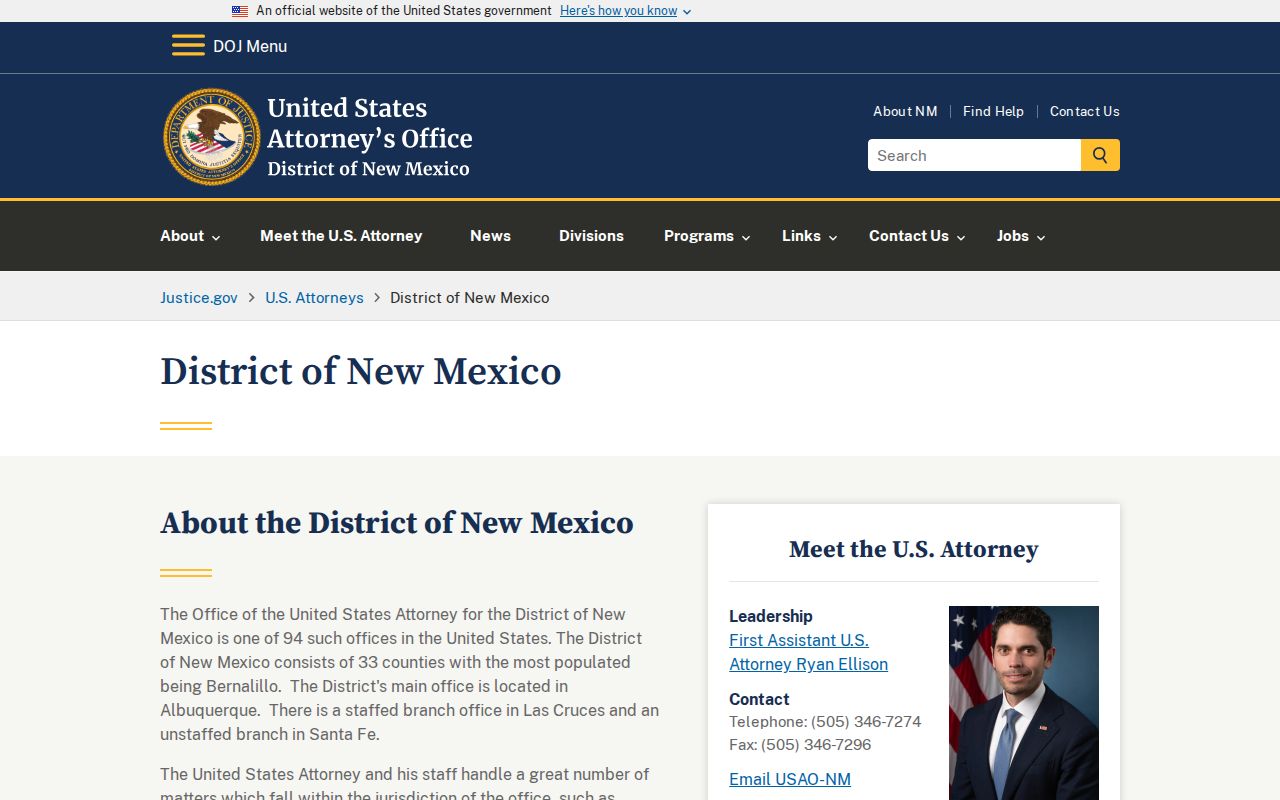
The federal source confirms why some Taos County events never appear in the state court portal.
Taos County Criminal Records by City
The top three incorporated places are the Town of Taos, Village of Questa, and Town of Red River. A city or village agency may hold the first incident report, while TCADC holds county booking data and the state courts hold filed cases. Local online access differs sharply. Taos has a town records portal and police counter. Questa and Red River require a more careful agency, clerk, jail, and court fallback because the reviewed official sources did not reveal equivalent local search tools.
Taos Criminal Records
Town police reports, municipal court records, and the Town Public Records Center.
Questa Criminal Records
Village clerk contact plus county booking and state court fallback routes.
Red River Criminal Records
Town or responding agency records with remote county and court checks.
Choose the city page only when the event began there. Countywide records and state repository checks still follow the office that created each file.